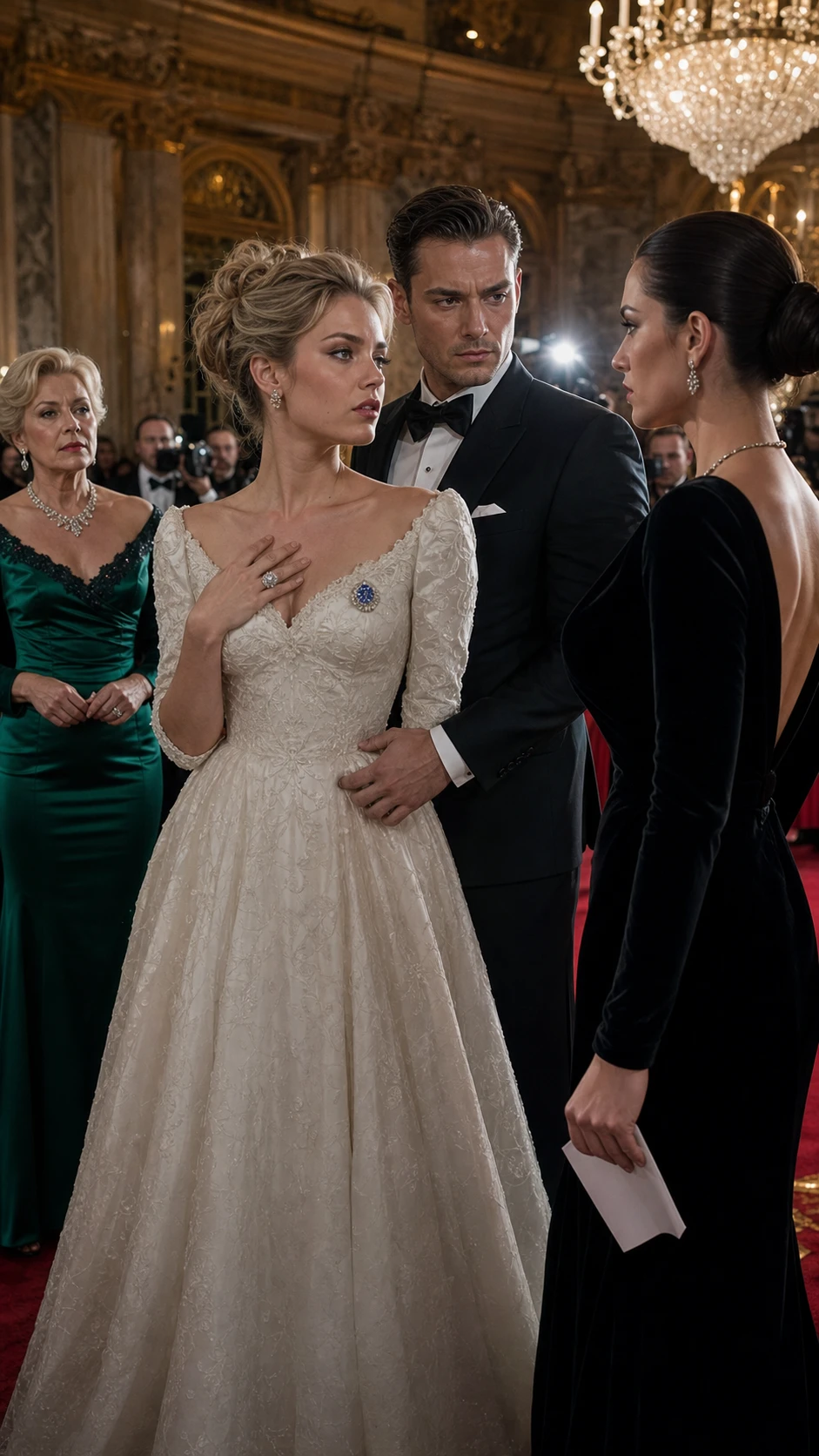
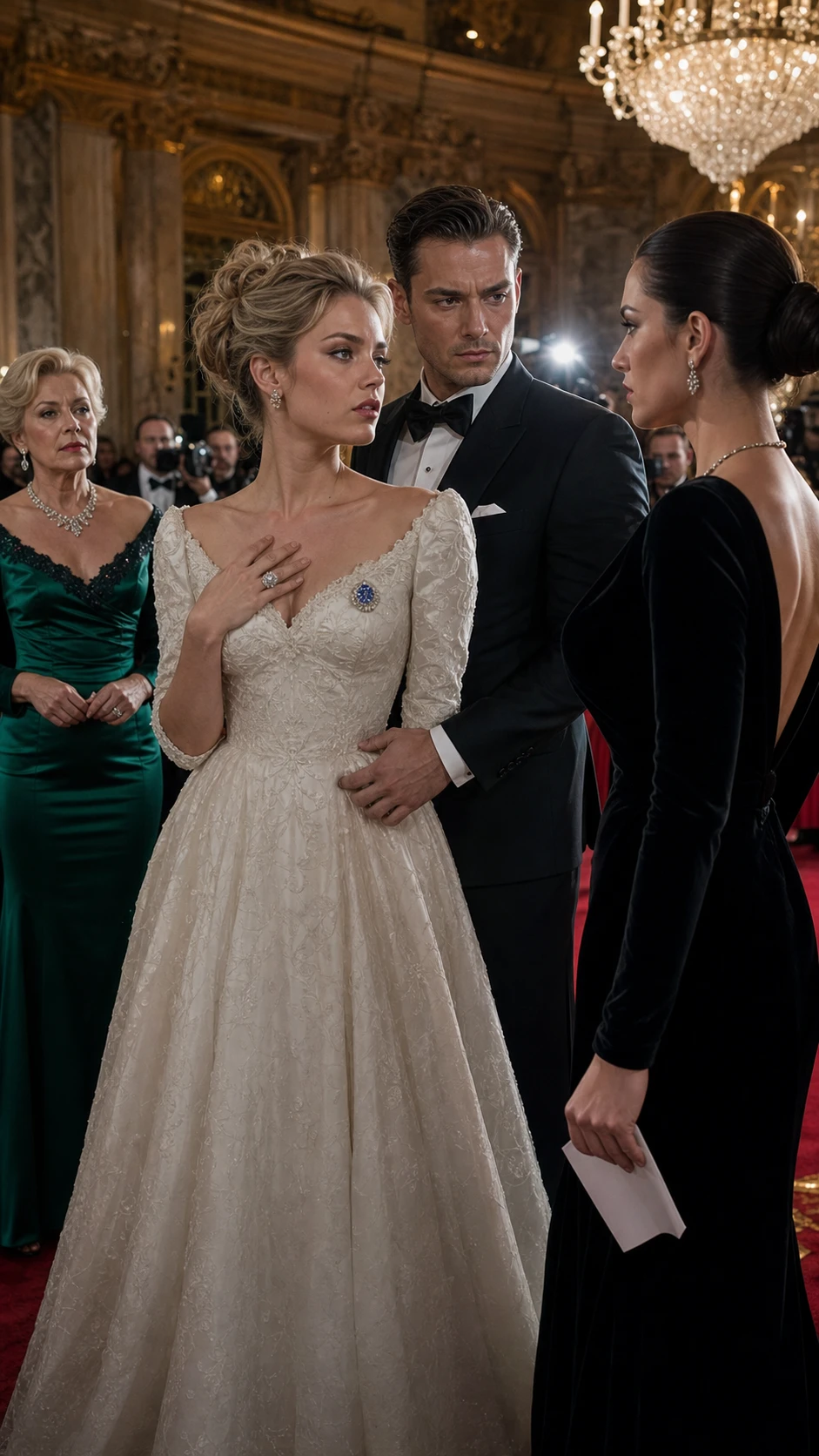
 My husband’s mistress walked the red carpet in my wedding dress while our divorce papers were still unsigned.
“Smile, Vivian,” Carter Hawthorne murmured beside me, his hand resting lightly at the small of my back as if he still had the right to touch me. “Tonight is not the place for a scene.”
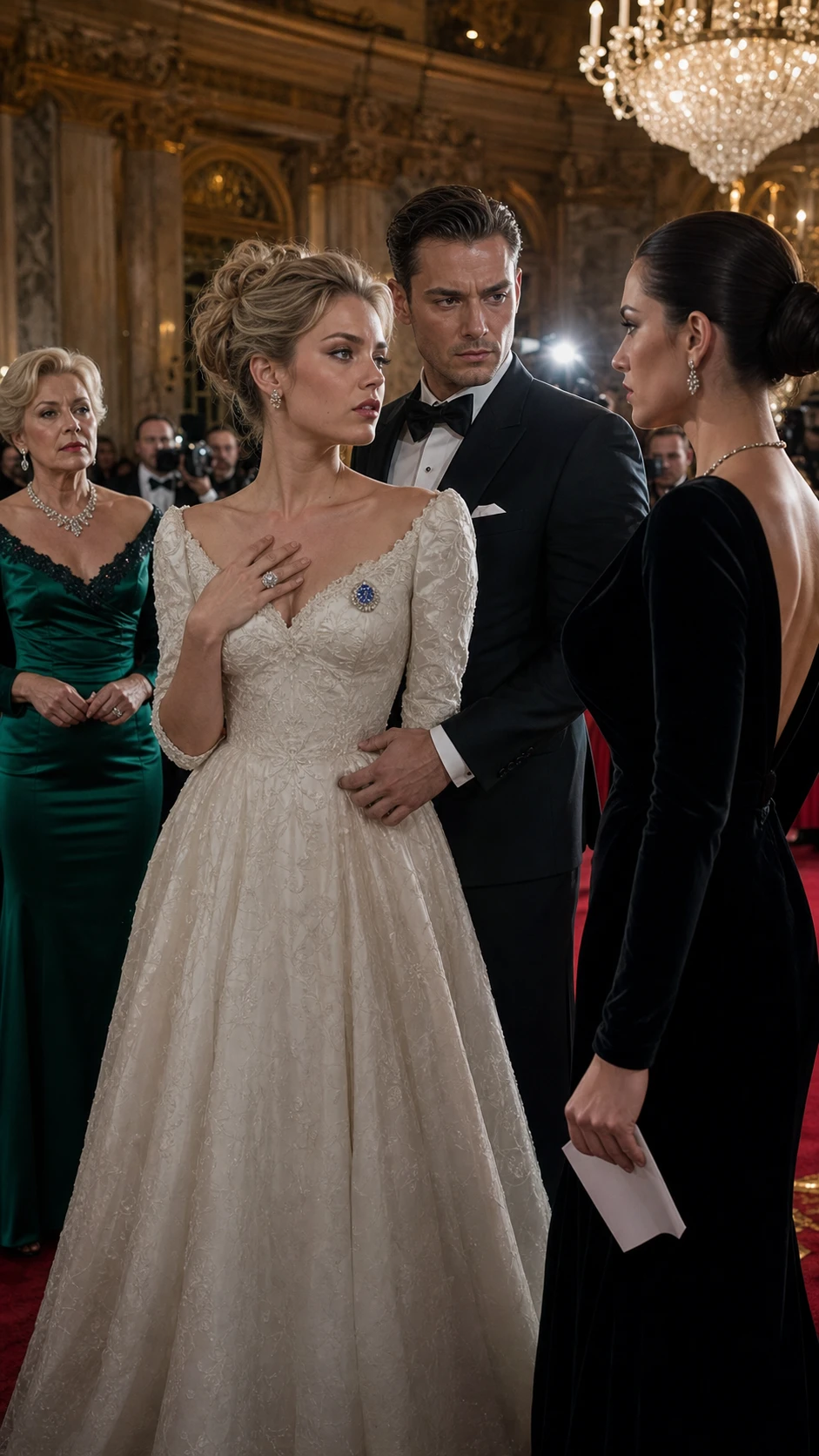
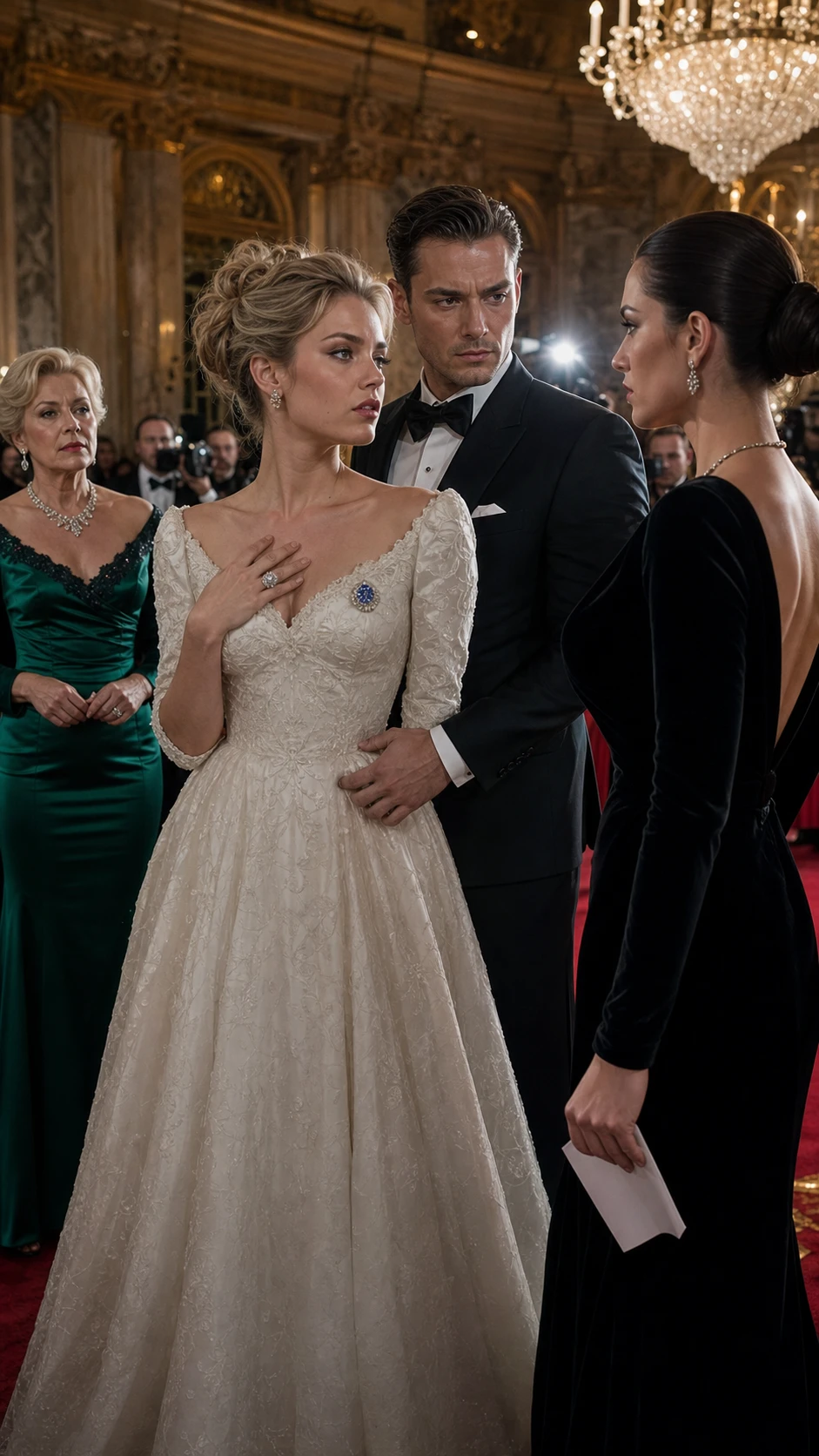
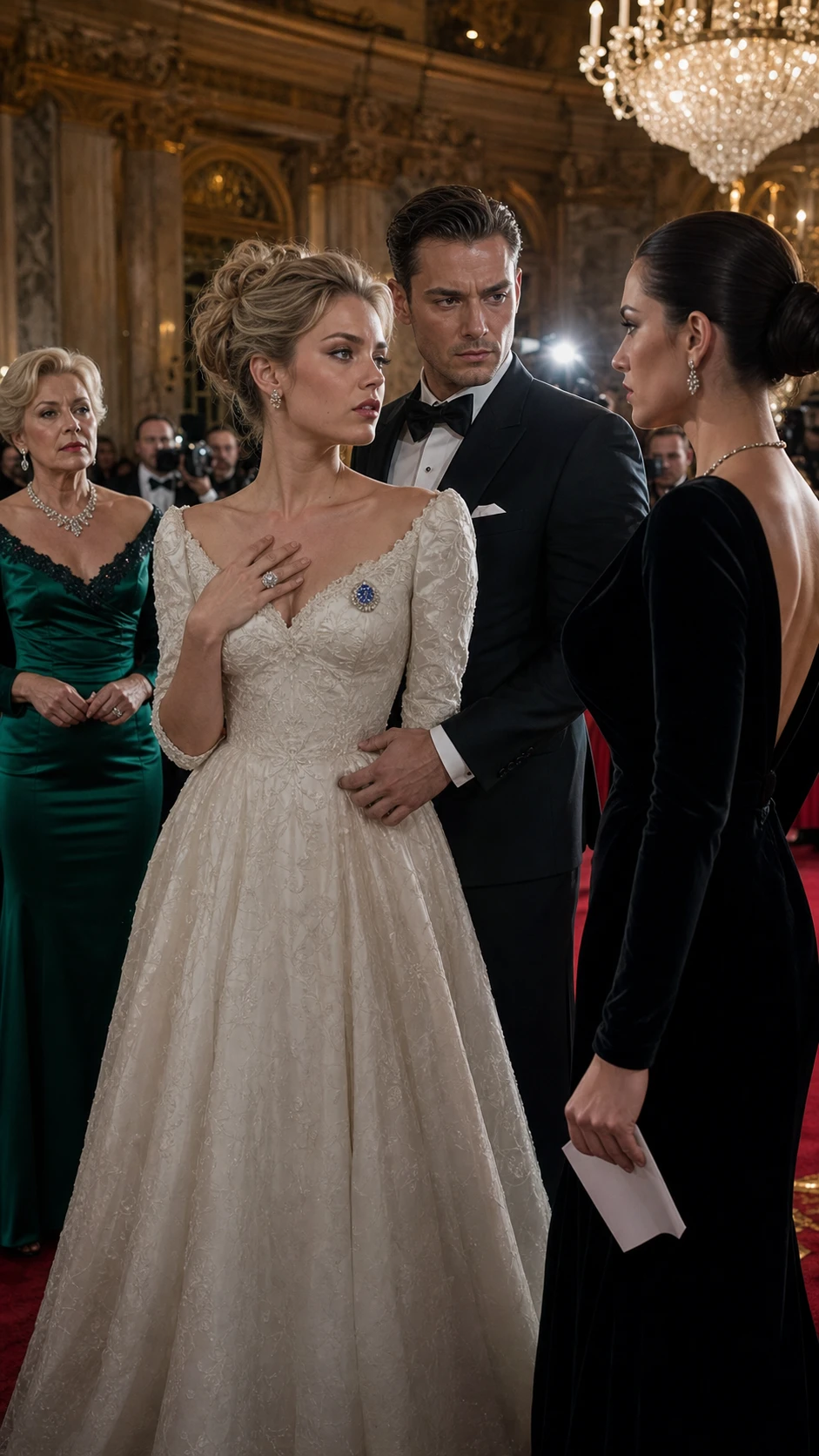
Across the marble steps of the Beaumont Charity Gala, Isla Vance turned for the photographers in ivory silk that had once belonged to my grandmother, then my mother, then me. The dress caught every flash like it was made of moonlight and old money. On her left hand, a diamond blazed so large that strangers gasped.
The caption on her Instagram had gone live ten minutes earlier.
Finally Mrs. Hawthorne.
I didn’t cry. I didn’t scream. I simply looked at the woman wearing my history and asked my husband one question.
“Did you give it to her?”
Carter’s jaw tightened. His mother, Eleanor Hawthorne, stepped between us in emerald satin, smiling for the cameras while her voice came out cold enough to cut crystal. “It was never really yours, Vivian. You married into this family. You can be removed from it.”
Then Isla lifted the skirt slightly, just enough for me to see the hidden seam near the bodice had been opened and resewn.
My grandmother’s dress had not only been stolen.
It had been searched.
And the one thing they had been desperate to find was still missing.
Before Carter could stop me, I stepped onto the red carpet, leaned toward Isla, and whispered, “You should have checked the law before you stole from a woman who knew exactly what she inherited.”
Her smile flickered.
Behind us, sirens began to rise.
CHAPTER 1 — THE WOMAN IN MY DRESS
The first time I saw Isla Vance wearing my wedding dress, I was sitting alone in the private dining room of Le Cygne, staring at a divorce agreement that offered me twelve million dollars to disappear quietly. Carter Hawthorne had chosen the restaurant because his family owned part of the building, because the chef knew not to interrupt, and because the walls were upholstered in pale blue silk thick enough to swallow a woman’s humiliation before it reached the street. Across from me, his attorney had placed the papers beside a crystal glass of water I had not touched. My husband sat to my right, still wearing the navy Brioni suit I had bought him for his thirty-ninth birthday, looking handsome, exhausted, and faintly irritated, as if ending a marriage were a scheduling conflict. His mother, Eleanor Hawthorne, sat opposite me with perfect posture, one gloved hand on her crocodile handbag, her wedding ring catching the candlelight like a verdict.
“Vivian,” Carter said softly, “this can be civil.”
Civil. A strange word for what they had done. Civil was sending flowers after a difficult conversation. Civil was dividing furniture with restraint. Civil was not having your husband’s mistress announce her engagement on Instagram while you were still legally his wife.
I looked at the document. Vivian Ashford Hawthorne hereby waives any claim to Hawthorne family assets, heirlooms, trusts, charitable holdings, private residences, art collections, jewelry, archives, garments, ceremonial objects, and items of historic family value acquired before, during, or after the marriage. The wording was too broad. That was the first thing I noticed. Not the betrayal, not the insult, not even the number at the bottom. The wording. They were not merely buying my silence. They were trying to make me deny ownership of something specific without naming it.
“I have my own attorney,” I said.
Eleanor’s smile did not move. “Of course you do. But your attorney does not understand Hawthorne matters.”
“No,” I replied. “My attorney understands the law. That’s usually enough.”
Carter looked away. That small movement told me more than his affair ever had. I had known about Isla for six months. Everyone thought I had discovered her through a lipstick stain or a hotel receipt, something theatrical and ordinary. The truth was less romantic. Carter had stopped lying carefully. Powerful men rarely grow guilty before they grow sloppy. He had started leaving his phone faceup, smiling at messages he did not open in front of me, buying perfume I did not wear. By the time a friend sent me a photo of him leaving the Carlyle with a twenty-seven-year-old influencer wrapped in his coat, I had already moved my grandmother’s letters, my mother’s jewelry, and the contents of one sealed cedar box to a bank vault in my maiden name.
What I had not moved was the dress.
The Ashford wedding dress had been in my dressing room at the Hawthorne townhouse because I believed even Carter would not touch it. It was foolish, perhaps, but marriage is built on many small foolishnesses before it collapses under one enormous fact. The dress had been made in Paris in 1951 for my grandmother, Lenora Ashford, when she married a shipping heir who loved her badly but left her well-protected. My mother wore it in 1983, altering only the sleeves. I wore it seven years ago in Newport beneath a white tent while Carter cried in front of three hundred people and promised he had never wanted anything the way he wanted me. The dress was not merely silk and lace. It was the only object that connected three generations of Ashford women who had learned that love was unpredictable but ownership required documentation.
Eleanor slid a pen toward me. “Twelve million dollars is generous.”
“Generous would be returning what belongs to me.”
Her eyes sharpened for half a second. “You will need to be more specific.”
There it was.
I leaned back. “Will I?”
Carter exhaled. “Vivian, don’t do this.”
“Do what? Ask why your mother is terrified of naming a dress?”
The attorney cleared his throat. He was a silver-haired man named Malcolm Price, known for making scandals vanish before breakfast. “Mrs. Hawthorne, the agreement is standard.”
“No agreement drafted by a man billing two thousand dollars an hour is standard.”
Carter rubbed his forehead. “Isla has nothing to do with this.”
My phone lit up before I could answer. Three messages arrived at once. Then five. Then twelve. The screen filled with names I had not heard from in months, women from charity boards and museum committees, old college friends, one distant cousin who never texted unless someone died or married badly. At the top was a message from my best friend, Maren: Do not react publicly until you call me. Then came a screenshot.
Isla Vance stood in the grand mirrored closet of Carter’s penthouse suite, one hand on her hip, lips parted in a practiced smile. She was wearing my dress. The caption underneath read: Finally Mrs. Hawthorne. Some legacies choose their rightful woman.
For a moment, the restaurant became silent in a way silence rarely is. It pressed against my ribs. The candles blurred, then steadied. I zoomed in on the photo. The bodice fit her imperfectly. The waist had been pinned. The hem floated too high above the floor. She had styled it with diamond earrings that belonged to Eleanor and a smugness that belonged entirely to herself. But the dress was mine. Not emotionally. Legally.
Carter saw my face and reached for my wrist. “Vivian—”
I pulled away before his fingers touched me. “You gave her my wedding dress.”
“No,” he said too quickly.
Eleanor’s expression hardened. “It was stored in a Hawthorne residence.”
I laughed once. It surprised even me. “That is your defense? If something is inside your house, it becomes yours?”
“You left it behind.”
“I left my husband behind too. Did he become available for public use?”
Carter flinched. Eleanor did not. Malcolm Price looked down at the table as if the silverware had become fascinating.
My phone rang. Maren. I declined it, then opened Isla’s post again. The comments were already multiplying. Congratulations, queen. Finally. You were always the better match. The internet loved a beautiful woman in stolen silk when the caption was confident enough. No one asked whose history she had stepped into. No one wondered why the wife was absent. America adored replacement women when they smiled like winners.
I stood.
Carter stood too. “Where are you going?”
“To retrieve my property.”
Eleanor’s voice sliced through the room. “Sit down.”
I turned to her. For seven years, I had allowed this woman to underestimate me because it made my life easier. Eleanor Hawthorne believed quiet women were manageable. She mistook restraint for weakness, manners for surrender, and old money for immunity. She had never understood that I was raised by Ashford women, and Ashford women were taught two things before piano: never raise your voice when a document can do it for you, and never threaten unless the trap is already closed.
“I will not sign your agreement tonight,” I said.
Carter’s eyes darkened. “Vivian, if you walk out now, the offer changes.”
“Good.”
“Don’t make me your enemy.”
I looked at the man I had once loved so completely that I softened my ambitions to fit beside his. Carter Hawthorne, CEO of Hawthorne Consolidated, darling of the financial press, son of a dynasty built on shipping, hotels, and discreet cruelty. He had been charming when he wanted something, tender when watched, generous when it cost him nothing. In private, he was not a monster. That was the hardest part. Monsters are simple. Carter was a man who could kiss my forehead during a migraine and still let his mother treat me like a temporary appointment. He could love comfort more than truth, reputation more than vows, and himself more than anyone who trusted him.
“You made yourself my enemy when you let another woman wear my dead mother’s dress.”
His face changed. For a second, grief or guilt or anger passed through it, too fast to name. Then Eleanor stood.
“You are emotional,” she said.
“No. I am precise.”
I took the divorce agreement, folded it once, and placed it in my handbag without signing. Malcolm Price finally spoke. “Mrs. Hawthorne, those documents are not yours to remove.”
I smiled. “Then sue me for stealing the paper you wanted me to sign.”
I walked out before any of them could stop me. The main dining room went quiet as I passed. Heads turned. Manhattan society was expert at pretending not to witness destruction while memorizing every detail. I kept my shoulders relaxed, my pace unhurried. Outside, a black town car waited beneath the awning. My driver, Tomas, opened the door, his face carefully blank.
“Home, Mrs. Hawthorne?”
I looked down at Isla’s photo again. Behind her, reflected faintly in the closet mirror, I saw something that turned my anger into ice. The cedar dress chest was open on the floor. The inner lining had been cut.
Not opened. Cut.
They had not taken the dress for romance. They had taken it apart looking for something.
“Not home,” I said. “The vault.”
Tomas blinked once, then nodded. “Yes, ma’am.”
As the car pulled into the rain-slicked Manhattan night, Maren called again. This time I answered.
“Tell me you’re not going to the penthouse,” she said.
“I’m not.”
“Good. Because Isla just posted a story.”
My stomach tightened. “What story?”
Maren was quiet for one second too long. “She’s at the Hawthorne Bridal Foundation preview. In your dress. With Carter. Vivian, they’re presenting her tonight as the new chair.”
I closed my eyes. The Hawthorne Bridal Foundation was my project. I had built it after my mother died, using her contacts and my own credibility to fund legal support for women trapped in financially abusive marriages. Eleanor had hated it from the beginning. Carter had praised it in public and ignored it in private. If they were giving it to Isla, this was not just personal. This was erasure.
Then Maren added, “Vivian, zoom in on the neckline.”
“I already saw the cut lining.”
“No. Not that. The brooch.”
I reopened the image. Isla had pinned a pearl-and-diamond brooch at the left side of the bodice. At first glance, it looked like decoration. Then I recognized the design: three small diamond stars around a pale central stone.
My grandmother’s Celestine brooch.
The brooch that had vanished from the Ashford estate inventory twenty-two years ago.
The brooch my mother had told me never to mention to a Hawthorne.
My hand tightened around the phone.
Maren whispered, “Vivian, why does your husband’s mistress have a stolen Ashford diamond on your wedding dress?”
Outside the window, the city lights streaked like gold through rain. I looked at the unsigned divorce papers in my bag, then at Isla’s smiling face on my screen.
“Because,” I said slowly, “they think the dress is the inheritance.”
But they were wrong.
The dress was only the lock.
And I was the only person alive who knew where my grandmother had hidden the key.
CHAPTER 2 — THE DIAMOND IN THE SEAM
The Ashford vault was three floors beneath a private bank on Madison Avenue, behind a bronze elevator door, two biometric scans, and a hallway so quiet it made every footstep sound expensive. My grandfather had opened the account in 1956 after discovering that romance was unreliable but Swiss banking principles were not. My mother had renewed it after her divorce. I had added my own name six months into my marriage, on a rainy Tuesday afternoon when Carter canceled dinner for the third time and Eleanor suggested, with a smile, that my family’s “sentimental objects” should eventually be integrated into Hawthorne archives. That was the day I understood she did not collect things. She absorbed them.
The vault manager, Mr. Ellery, met me in a charcoal suit and an expression of professional non-surprise. Men like him had seen heirs sob, widows rage, sons betray fathers, and daughters arrive at midnight with pearls in their purses. Nothing shocked a banker whose clients stored secrets beside securities.
“Mrs. Hawthorne,” he said. “We were not expecting you.”
“No one was.”
He led me into a private viewing room with walnut walls and a white marble table. Under the lights, every object looked guilty. I removed my gloves, signed the ledger, and watched as he placed my sealed cedar box in front of me. The box smelled faintly of lavender, paper, and the past. My mother had kept it in her bedroom closet until the week before she died. She had called me to her bedside at three in the morning, when the morphine made her gentle but not confused, and told me to listen carefully.
“One day,” she had whispered, “someone may come for the dress.”
I had almost laughed then, because grief makes old warnings sound theatrical. “The dress?”
“The dress is what they know to look for. The truth is what they won’t recognize.”
I opened the box now with the small gold key I wore on a chain beneath my blouse. Inside were letters tied with navy ribbon, a yellowed photograph of my grandmother in the dress, and a slim black envelope sealed with wax. I had read the letters years ago. Love letters, legal letters, one furious note from my grandmother to a man named August Hawthorne. The black envelope, however, I had never opened. My mother had written my name across it in her slanted hand: Vivian, only when they touch the dress.
Tonight, they had touched it.
I broke the seal.
Inside was a single page and a folded certificate. The page was in my grandmother’s handwriting, elegant and severe.
My dearest girl, if you are reading this, the Hawthornes have remembered what they stole but not what they signed. The Celestine Diamond was never a Hawthorne jewel. It was Ashford property placed under conditional ceremonial loan in 1951, to be worn only by a lawful Ashford bride or her direct heir. August Hawthorne attempted to claim it after my separation from your grandfather, believing possession would become ownership. He was wrong. I hid the stone because men who confuse women with assets must occasionally be taught inventory law. The diamond may only be transferred, sold, pledged, exhibited, or incorporated into a charitable instrument by the living legal female heir of Lenora Ashford. If they place it on another woman before your marriage is legally dissolved, they will have committed not only theft, but fraud, conversion, and public misrepresentation of hereditary title. Do not argue with them in private. Let them stand under lights.
I read it twice.
Then I read the certificate.
The Celestine Diamond was not the central stone in Isla’s brooch. It was larger, older, and historically significant, a rare pale blue diamond originally acquired by my great-grandmother from a Belgian estate after World War II. The brooch Isla wore was a decoy setting designed to hold the stone temporarily during formal ceremonies. The real diamond had been removed decades ago and hidden somewhere connected to the dress. That was what the Hawthornes believed. That was why they had cut the lining. That was why Eleanor wanted the divorce agreement to include garments, heirlooms, ceremonial objects, archives, and historic family value.
They were not trying to avoid scandal.
They were trying to legalize theft before anyone noticed.
My phone buzzed again. Maren sent a video from the foundation preview. Isla stood on a small stage at the Hawthorne Hotel, my dress glowing beneath chandeliers, Carter beside her, Eleanor behind them like a queen mother supervising a coronation. Isla held a champagne flute and smiled at a room full of donors who had once called me brave.
“I know transitions can be emotional,” Isla said in the video, her voice sweet and rehearsed. “But legacy is not about who came first. It’s about who carries it beautifully.”
Laughter. Applause. Carter looked at her with public tenderness. I watched his hand rest at her waist exactly where it had rested on mine in a thousand photographs.
Then Eleanor stepped forward. “The Hawthorne Bridal Foundation will enter a new era. One less burdened by personal bitterness, and more aligned with grace.”
Personal bitterness. That was what they were calling a wife who objected to being replaced in her own dress.
Mr. Ellery returned with tea I had not asked for. He saw my expression and set it down silently.
“I need copies of every document connected to the Celestine Diamond,” I said.
His brows rose slightly. “Tonight?”
“Tonight.”
“There are archival materials. Some are digitized. Some require retrieval.”
“Retrieve them.”
He studied me. “May I ask whether this concerns a legal dispute?”
“It concerns several.”
“In that case, Mrs. Hawthorne, I should inform you that your mother placed an instruction in the account. If you requested Celestine materials under urgent circumstances, I was to provide the secondary packet.”
I went still. “There’s another packet?”
“Yes.”
“Why wasn’t I told?”
“Your mother’s instruction was specific. You were not to receive it unless the dress was used by a non-heir before your divorce, annulment, or widowhood was finalized.”
A laugh almost escaped me, but it would have sounded too much like pain. My mother had known the exact shape of a betrayal that had not happened yet. Or perhaps she had known the Hawthornes well enough to predict their greed.
Mr. Ellery left and returned with a flat leather portfolio. Inside were photocopies of old contracts, shipping insurance records, photographs, and one document that made the room seem colder.
A 1989 settlement agreement between Eleanor Hawthorne and Margaret Ashford, my mother.
Eleanor had tried to acquire the Celestine Diamond once before.
I sat down.
In 1989, when my father’s company collapsed and my mother was desperate to protect what remained of the Ashford estate, Eleanor had offered to purchase several family objects privately. The language was polite. The intention was not. She wanted the diamond, the dress, and the rights to display both in Hawthorne charitable exhibitions. My mother refused. Eleanor sued indirectly through a shell foundation, claiming the brooch setting had been pledged to a Hawthorne ancestor. The case settled confidentially. My mother kept ownership. Eleanor received nothing except a promise that if the Celestine ever appeared publicly, provenance documents would be produced.
Which meant Eleanor knew exactly what Isla was wearing.
And exactly what crime she was staging.
At the bottom of the packet was a handwritten note from my mother.
Vivian, Eleanor does not want jewelry. She wants legitimacy. The Celestine is tied to a voting instrument in the Ashford Women’s Trust. Whoever controls it can trigger review of several charitable holdings connected to Hawthorne money. If Carter ever asks you to “merge foundations,” refuse. If Eleanor ever calls you unstable, document everything. If another woman wears the dress, do not stop her too early.
Do not stop her too early.
My mother had written those words as if revenge required patience.
The door opened again. This time it was not Mr. Ellery. It was Maren Bell, wearing jeans under a camel coat, her black hair twisted into a messy knot, eyes sharp with the fury of a woman who had loved me since boarding school and never learned how to be polite about injustice. She had somehow talked her way past security because Maren could talk her way into a papal conclave if the right intern was nervous enough.
“You look terrifying,” she said.
“I feel informed.”
“Good. Because Carter’s people are telling donors you had a breakdown.”
I looked up slowly.
She handed me her phone. A gossip account had posted a blind item, though it was barely blind. Sources say a certain society wife became erratic after learning her soon-to-be ex has moved on. Friends are concerned she may disrupt tonight’s charity preview. Her attachment to certain family garments has raised eyebrows.
I stared at the words attachment to certain family garments.
“Eleanor,” I said.
“Obviously. And it gets worse.” Maren swiped. “Isla is scheduled to attend the Beaumont Gala tomorrow as Carter’s fiancée. The foundation board is planning to announce her as interim chair. They’re pushing the narrative that you voluntarily stepped aside.”
“I didn’t.”
“I know. But half the board wants Hawthorne money more than truth.”
I turned back to the documents. The law was clear. The property records were clear. But society did not run on clarity. It ran on confidence. If Isla appeared publicly in my dress, wearing the decoy brooch, beside my husband, with Eleanor’s endorsement, most people would accept the lie because it was prettier than the truth. By Monday, I would be the bitter ex-wife. By Tuesday, the foundation would belong to Isla. By Wednesday, the dress would vanish into alterations, the brooch would be reset, and the Celestine trail would be buried under lawyers and champagne.
Unless I let them stand under lights.
“Maren,” I said, “how many press outlets are covering the Beaumont Gala?”
“All of them. It’s the biggest charity event of the season.”
“Good.”
Her eyes narrowed. “Vivian.”
“I need the foundation bylaws, the gala program, the guest list, and the name of the detective who handled the Van Cleef theft at the Met benefit last year.”
“You’re calling the police?”
“Not yet.”
“Then what are you doing?”
I looked at Isla’s frozen smile on the screen. “I’m giving her every opportunity to confess publicly.”
Maren smiled slowly. “There she is.”
For the next six hours, the city outside moved from rain to black glass while we built a case with the quiet violence of women who had been underestimated too long. My attorney, Naomi Sloane, answered on the second ring despite being in London. She listened without interrupting, then said, “Do not accuse them without giving them a chance to repeat the misrepresentation in front of witnesses.”
“They already have.”
“Not enough. You need reliance, public claim, and refusal to return property after notice. Send a formal demand.”
“At three in the morning?”
“Especially at three in the morning.”
So we did. Naomi drafted a notice to Carter, Eleanor, Isla, Malcolm Price, and the Hawthorne Bridal Foundation board. It stated that the Ashford wedding dress, the Celestine brooch setting, and any associated stones or archival materials were private Ashford property. It demanded immediate return. It warned that public display by a non-heir would constitute misappropriation, conversion, and fraud. It also informed them that any attempt to use the items for charitable, financial, reputational, or fundraising purposes would trigger legal action.
At 3:42 a.m., we sent it.
At 3:49 a.m., Carter called.
I let it ring.
At 3:51, Eleanor called.
I let it ring.
At 3:57, Malcolm Price emailed Naomi. His response was brief.
Mrs. Hawthorne abandoned the garment in a Hawthorne residence. The family disputes her characterization of ownership. Any attempt to disrupt the Beaumont Gala will be considered harassment and reputational sabotage. Our client reserves all rights.
At 4:03, Isla posted another story.
A close-up of her hand smoothing the dress.
Caption: Some women inherit bitterness. Others inherit the future.
Maren read it aloud and whispered, “She is either stupid or suicidal.”
“No,” I said. “She is protected.”
And that was when my phone buzzed with a message from Carter.
Vivian. Please don’t come tomorrow. You don’t understand what my mother will do.
For the first time all night, my hands went cold.
Not what I will do.
What my mother will do.
I typed back one sentence.
Then tell me the truth.
Three dots appeared. Vanished. Appeared again.
Finally, Carter replied.
The diamond isn’t the only thing hidden in the dress.
CHAPTER 3 — THE HUSBAND WHO KNEW
Carter did not call again after sending that message. Cowardice, I had learned, often arrives disguised as restraint. Men like him liked to reveal just enough truth to feel tragic, then retreat before accountability could enter the room. By sunrise, Manhattan had washed itself clean. The rain dried from the pavement, the sky turned a hard winter blue, and every society account in the city was reposting Isla Vance in my wedding dress as if theft became romance when filtered in champagne gold. By eight o’clock, three donors had resigned from my foundation board “pending clarity.” By nine, a columnist described me as “the absent former chair.” Former. Not resigned, not removed, just quietly rewritten.
Naomi arrived from London at noon in a black suit, carrying a garment bag and the expression of a woman who billed by the hour but judged for free. She spread documents across my dining table in the apartment I had leased under my maiden name two months earlier. The apartment was smaller than the Hawthorne townhouse, but it had two priceless qualities: every lock answered to me, and no one inside pretended cruelty was tradition.
“You need to decide what you want tonight,” Naomi said.
“I want my dress returned.”
“That is the surface answer.”
“I want Isla publicly exposed.”
“That is the satisfying answer.”
“I want Eleanor unable to do this to another woman.”
Naomi looked up. “That is the legal answer.”
Maren, sitting cross-legged on the sofa with a laptop, raised her coffee. “And I want Carter to develop stress hives on live camera.”
Naomi ignored her. “The message from Carter matters. The diamond isn’t the only thing hidden in the dress. What else could be there?”
I opened my grandmother’s letter again. The dress is what they know to look for. The truth is what they won’t recognize.
“My mother said the Celestine is tied to a voting instrument in the Ashford Women’s Trust,” I said. “If the Hawthornes control it, they can trigger review of charitable holdings connected to their money.”
Naomi nodded. “I looked into that on the flight. The Ashford Women’s Trust holds minority oversight rights in three legacy charitable funds. One of them co-administers grants with Hawthorne Bridal. If Eleanor can prove Hawthorne possession or ceremonial transfer of the Celestine, she could argue standing to merge or dissolve certain restrictions.”
“Meaning?”
“Meaning your foundation’s legal support program could be gutted and repackaged as a society scholarship fund with Isla’s face on it.”
Maren made a sound of disgust. “So they’re stealing a dress to steal a charity that helps women leave men like them.”
“Essentially,” Naomi said.
I thought of the women who had sat in my office whispering about husbands who tracked their spending, fathers who controlled trust distributions, lawyers who told them to be realistic. The foundation was not a vanity project. It was the only thing in my marriage I had built without Carter’s permission. Eleanor had always understood that better than he did.
My doorbell rang.
We all froze.
Maren checked the security feed. “It’s Carter.”
Naomi stood. “Do you want me to handle it?”
I looked at the screen. Carter stood in the hallway wearing no coat, his hair slightly windblown, his face gray with exhaustion. He looked like the man I had married only in outline. The rest had been eaten by weakness.
“Let him in,” I said.
Maren opened the door but did not move aside immediately. “You look terrible.”
“Good morning to you too, Maren.”
“It’s afternoon.”
He entered slowly, eyes moving from Naomi to the documents to me. “You’re building a war room.”
“You built it for me.”
His gaze fell to the copy of my grandmother’s letter. Something in his face shifted. Recognition. Not surprise.
“You knew,” I said.
Carter closed his eyes. “Not at first.”
Naomi’s voice was calm. “Mr. Hawthorne, I should inform you that I represent Vivian.”
“I assumed.”
“Then assume everything you say may become useful.”
He almost smiled. Almost. Then he looked at me. “My mother told me the dress belonged to the Hawthorne archive.”
“You believed her?”
“I wanted to.”
That answer hurt more than denial. Lies can be attacked. Wanting is murkier.
“When did you learn the truth?” I asked.
“The night before our wedding.”
The room went silent.
Carter walked to the window, then stopped as if he had lost the right to stand comfortably anywhere I lived. “My father was drunk. He said Eleanor had finally secured what August failed to take. I asked what he meant. He told me about the Celestine, the trust, your grandmother. I confronted my mother. She said it didn’t matter because after the wedding, our assets would be aligned.”
“Our assets,” I repeated.
“I told her no.”
“But you married me anyway.”
“I loved you.”
“You loved me and decided not to mention that your family considered my inheritance a strategic acquisition?”
He flinched. “I thought I could keep it separate. I thought if you never knew, she would stop pushing.”
Maren laughed bitterly. “Amazing. A man’s plan for protecting a woman: keep her uninformed and hope his mother gets bored.”
Carter looked at her. “I deserve that.”
“You deserve more, but we’re indoors.”
Naomi leaned forward. “What else is hidden in the dress?”
Carter’s face tightened. “I don’t know exactly.”
“Try,” I said.
He swallowed. “My father kept recordings.”
Of all the answers, that was not the one I expected. “Recordings of what?”
“Board meetings. Private negotiations. Family disputes. He was paranoid. He believed everyone would betray him because he had betrayed most of them first. Before he died, he told me Eleanor had once forced your mother into a settlement by threatening to expose something about your father’s debts. But he also said Margaret Ashford had leverage of her own. Something sewn into the dress before your wedding. A microdrive, maybe. He said Eleanor searched for it after the ceremony but couldn’t find it.”
My mother’s words returned. The truth is what they won’t recognize.
I sat down slowly. My mother had altered the dress before my wedding. She had insisted on supervising the final fitting even though she was already sick. I remembered her fingers resting at my waist, her eyes wet but focused. I remembered her saying, “A dress should fit a woman’s body, not the life others want for her.” I had thought she meant marriage. Maybe she had meant evidence.
“What was on the drive?” Naomi asked.
Carter shook his head. “I don’t know.”
“Then why is Eleanor moving now?”
“Because Isla is pregnant.”
The sentence landed with a strange quietness. Not shock. Not heartbreak. Something cleaner. A final door closing.
Maren whispered, “Oh, Carter.”
He looked at me, shame raw in his eyes. “I found out three weeks ago.”
“And your mother decided to install her.”
“She decided Isla would be easier.”
“Easier than me.”
“Yes.”
The honesty was brutal enough to be useful. Isla was not the love of his life. She was a candidate. Beautiful, ambitious, hungry, and inexperienced enough to mistake selection for victory. Eleanor did not want a daughter-in-law. She wanted a vessel. If Isla was pregnant, Eleanor had a new heir to protect, a new narrative to polish, and a reason to erase me quickly.
“Does Isla know about the diamond?” I asked.
“She knows there is something valuable connected to the dress. My mother told her enough to make her feel chosen.”
“And you let her wear it.”
“I tried to stop it.”
“Did you?”
His silence answered.
I stood and walked closer to him. Once, being near Carter had felt like entering warmth. Now it felt like standing beside a beautiful house after discovering the foundation was hollow.
“You warned me not to come tonight,” I said. “Why?”
His jaw flexed. “My mother plans to have security remove you if you appear unstable. She has a doctor prepared to say you’ve been under emotional distress. She has statements from staff claiming you threatened Isla.”
Maren stood. “That is defamation.”
Naomi’s eyes sharpened. “That is conspiracy.”
Carter looked at me. “I came to tell you because I don’t want you hurt.”
“No,” I said. “You came because your mother might finally lose, and you want a record that you tried.”
He took that like a slap because it was true.
My phone buzzed. An email from the Beaumont Gala committee. Subject: Security Protocol Notice. Due to heightened concerns regarding guest safety and potential disruption, your invitation has been placed under review.
Maren snatched her laptop. “They’re uninviting you?”
Naomi read over my shoulder. “They’re creating a paper trail to justify removal.”
Carter looked miserable. “Vivian, don’t walk into this.”
I laughed softly. “You still don’t understand. Your mother is not trying to keep me out because I am dangerous. She is trying to keep me out because I am invited.”
Naomi smiled for the first time that day. “As founder of the legal fund, major donor, and named honoree in the original program.”
“And,” I added, opening another email, “because the Beaumont Gala is being hosted in partnership with the Ashford Women’s Trust.”
Carter stared. “What?”
“My mother helped create the trust’s gala partnership before she died. Eleanor erased my name from the program preview, but she cannot erase the trust documents.”
Naomi tapped the certificate. “Which gives Vivian standing.”
Maren looked at me. “So we go?”
“We go.”
Carter stepped forward. “Vivian, listen to me. If you confront Isla, my mother will make you look insane.”
“Then I won’t confront Isla.”
He hesitated. “What does that mean?”
“It means I will let Isla do exactly what your mother trained her to do. Smile. Pose. Claim. Lie.”
Naomi gathered the documents. “And then?”
I looked at Carter, and for the first time since he arrived, I let him see how little power his regret had left.
“Then I will ask for my property back in front of everyone.”
Carter’s phone rang. He looked down. His mother. He declined it. A second later, mine rang from an unknown number. Naomi nodded for me to answer on speaker.
Eleanor’s voice filled the room, smooth and venomous. “Vivian, I know Carter is there.”
I looked at him. His face drained.
“Then you also know he talks too late,” I said.
A pause. Then Eleanor laughed softly. “You always had a talent for making dignity sound like strategy.”
“And you always had a talent for mistaking theft for tradition.”
Her tone cooled. “Come tonight, and you will leave in disgrace.”
“I’ve already been disgraced. You posted photos.”
“You think a dress makes you powerful?”
“No. Ownership does.”
Another pause. When Eleanor spoke again, her voice had changed. The silk was gone. Only steel remained.
“You foolish girl,” she said. “The dress was never the prize.”
I went still.
Eleanor continued, “Your mother hid something that belongs to me. If you force my hand tonight, I will not stop at your marriage. I will open every grave in the Ashford family and let the world see what your mother did to protect you.”
The call ended.
For a moment, no one moved.
Then Naomi asked quietly, “Vivian, what did your mother do?”
I looked at the photograph of Lenora Ashford in the dress, then at the black envelope, then at Carter, whose fear now seemed older than tonight.
“I don’t know,” I said.
But I finally understood the real danger.
Eleanor was not afraid of what I owned.
She was afraid of what my mother had buried.
CHAPTER 4 — THE GALA TRAP
The Beaumont Hotel had been built by men who believed marble could forgive money. Its lobby rose five stories beneath a ceiling painted with clouds, angels, and the kind of gold leaf that made poverty seem like a personal failure. On gala nights, the entrance transformed into a theater of American wealth: black cars rolling forward in perfect sequence, photographers shouting names, women stepping from limousines in diamonds insured for more than most homes, men adjusting cufflinks while pretending not to enjoy being watched. I arrived at 8:17 p.m. in a black velvet gown with long sleeves, no necklace, and my mother’s gold key hidden beneath the fabric against my skin.
Maren stepped out behind me in silver satin, smiling like she hoped someone would try us. Naomi followed in tailored black, carrying a clutch that contained copies of legal notices, trust instruments, and enough evidence to ruin dinner for every Hawthorne attorney in attendance. We did not arrive loudly. We did not need to. The red carpet recognized tension before people did. Cameras turned. Voices softened. Someone whispered my name, then someone else, then the air filled with that delicious society panic that occurs when the woman everyone has been discussing enters before they have agreed on the official version.
At the top of the steps stood Carter.
For a second, I saw the man from our wedding day: tall, dark-haired, controlled, beautiful enough to make intelligent women forgive structural problems. Then Isla appeared beside him in my dress, and memory burned away.
The dress looked wrong on her. Not because she was not beautiful. She was. Isla Vance possessed the glossy, expensive beauty of a woman who had studied desire as a business model. Her hair fell in perfect waves. Her makeup was soft. Her diamond earrings trembled under the flashes. But the dress resisted her. The bodice pulled slightly at the seams. The skirt did not move with her body the way it had moved with mine. She wore it like a costume of victory, unaware that some garments remember their owners.
Pinned at her heart was the Celestine brooch setting.
The central stone glowed pale blue.
My breath stopped.
Naomi saw it too. “Is that—”
“No,” I whispered. “It can’t be.”
The real Celestine Diamond had been hidden for decades. My mother had implied it was not in the brooch. My grandmother’s letter called the brooch a decoy setting. And yet there, under a thousand flashes, a blue diamond burned against my stolen dress.
Either Eleanor had found it.
Or she wanted me to believe she had.
Isla saw me and smiled. It was a young smile, triumphant and brittle. Carter looked like a man standing on a bridge he had helped set on fire. Eleanor descended toward me in emerald silk, her diamonds cold, her expression serene.
“Vivian,” she said, kissing the air beside my cheek. “How brave of you to come.”
“How predictable of you to say that.”
Her smile sharpened. “You should be careful tonight. People are concerned.”
“About theft?”
“About your state of mind.”
Maren laughed. “Eleanor, at your age, shouldn’t you be tired of recycling misogyny?”
Eleanor ignored her and turned to Naomi. “Counsel. I assume you’re here to keep your client from embarrassing herself.”
Naomi smiled pleasantly. “I’m here to take notes.”
A photographer called, “Mrs. Hawthorne! Over here!”
Both Isla and I turned.
For one exquisite second, the red carpet froze around the question of which Mrs. Hawthorne had been summoned. Isla recovered first, lifting her chin and sliding her arm through Carter’s. I did not move. I let the cameras capture the tableau: the wife in black, the mistress in ivory, the husband between them, the mother watching like a general.
Then I said, clearly enough for the nearest microphones, “You can call her Miss Vance. My divorce is not final.”
The flashes exploded.
Isla’s smile twitched.
Carter whispered, “Vivian.”
I looked at him. “Accuracy matters.”
Eleanor stepped closer, her voice low. “You have made your point.”
“No. I’ve entered.”
Inside the ballroom, the Beaumont had arranged three hundred white roses beneath chandeliers the size of small moons. At every table, place cards shimmered in calligraphy. Mine had been moved to the far side near a retired judge and a textile heiress who once told me she admired my restraint because she had mistaken it for passivity. Naomi noticed immediately.
“They tried to isolate you,” she said.
“They tried to give me sight lines,” I replied.
From my table, I could see the stage, the auction display, the foundation board, and the security team Eleanor had stationed discreetly near the east exit. I could also see Isla touching the brooch every few minutes, as if reassuring herself the stone was still there.
Dinner proceeded with the unnatural elegance of an execution scheduled between courses. The chairman spoke about legacy. A senator spoke about women’s empowerment while avoiding eye contact with me. Carter gave brief remarks about “family transitions” that made several guests stare at their salads. Then Eleanor rose to introduce the evening’s special announcement.
Maren leaned toward me. “Here we go.”
Eleanor took the stage beneath a wash of golden light. She was magnificent, I had to give her that. Some women age into softness. Eleanor had aged into architecture.
“Tonight,” she began, “the Hawthorne family is honored to celebrate not only philanthropy, but continuity. Institutions survive because they adapt. Because they welcome new voices. Because they release bitterness and embrace grace.”
A murmur moved through the room. Cameras lifted.
“It is my privilege to announce that the Hawthorne Bridal Foundation will enter its next chapter under the interim chairmanship of a woman who embodies elegance, compassion, and the future of our family. Miss Isla Vance.”
Applause began before people had fully understood what they were endorsing. Isla stood, radiant. Carter stood beside her. I remained seated, hands folded in my lap.
Isla reached the stage and kissed Eleanor’s cheek. Then she stepped to the microphone.
“I know some people may find change difficult,” she said, glancing toward my table just long enough for the cameras to catch it. “But I believe love means knowing when to let go. This dress, this family, this foundation—these are not relics. They are promises. And I am honored to carry them forward.”
The applause grew. She placed one hand over the brooch.
“I am especially honored to wear a piece of Hawthorne history tonight,” she continued. “A symbol entrusted to me as the future Mrs. Hawthorne.”
Naomi’s pen stopped moving.
There it was.
Public claim.
False ownership.
Reliance in a fundraising context.
Eleanor had let Isla say it herself.
I rose.
The room did not quiet immediately. It rippled. Then the ripple became silence as people turned. I walked toward the stage slowly, because anger is most frightening when it does not hurry. Security shifted near the wall. Carter stepped down from the stage halfway, panic tightening his face.
“Vivian,” he said under his breath. “Don’t.”
I passed him.
Isla gripped the microphone. “This is not appropriate.”
“No,” I said, taking the second microphone from the podium before anyone could stop me. “It is evidence.”
A sound moved through the ballroom. Gasps, whispers, the tiny delighted horror of people realizing dessert had become scandal.
Eleanor’s voice was calm. “Vivian, sit down.”
“I will, after Miss Vance returns my property.”
Isla laughed, but it came out too sharp. “Your property? Carter gave this to me.”
“Carter cannot give what he does not own.”
The photographers surged closer. Security hesitated. Rich people love order, but they love public collapse more.
I turned slightly toward the room. “The dress Miss Vance is wearing is the Ashford wedding dress, made in Paris in 1951 for my grandmother Lenora Ashford. It was worn by my mother, then by me. It is not Hawthorne property. The brooch setting pinned to it is also Ashford property, subject to documented ownership restrictions.”
Eleanor stepped to the microphone, still smiling. “This is a painful domestic dispute, and we ask for compassion.”
Naomi’s voice rang from below the stage. “Formal notice was served at 3:42 a.m. demanding return of the property and warning against public display.”
Maren lifted printed copies. “I have extras.”
A nervous laugh broke from somewhere in the room.
Isla’s face flushed. “This is ridiculous. You’re jealous because Carter chose me.”
I looked at her then, really looked. Beneath the diamonds and defiance, she was frightened. Not enough to stop, but enough to understand she was no longer performing for followers. She was standing in a legal trap wearing the evidence.
“Isla,” I said quietly, “did Eleanor tell you the brooch was yours?”
“She told me it was Hawthorne history.”
“Did she tell you the diamond could only be worn or transferred by the legal female heir of Lenora Ashford?”
Eleanor’s expression hardened. “Do not answer that.”
Too late.
The room heard it.
Isla looked between us. “What diamond?”
And that was when I knew.
She did not know. She had been dressed like a queen and positioned like a thief. Eleanor had not trusted her with the truth. She had used her vanity as camouflage.
I took one step closer. “The stone on your chest.”
Isla’s hand flew to it. “This?”
Eleanor moved fast. Faster than I expected. She reached for Isla’s shoulder, but Carter caught his mother’s wrist before she could touch the brooch.
“Enough,” he said.
The ballroom erupted.
Eleanor stared at her son with a hatred so pure it seemed almost holy. “Let go of me.”
Carter did not. “No.”
For one second, I almost felt sorry for him. Too late is still better than never, but it does not resurrect what cowardice killed.
Naomi came onto the stage with two uniformed Beaumont security officers behind her and a man in a dark suit I recognized from Maren’s research: Detective Adrian Vale, art theft division, NYPD. He did not look impressed by money. That alone made him dangerous in the room.
“Miss Vance,” Detective Vale said, “please do not remove the brooch yourself.”
Isla went white. “Am I being arrested?”
“Not if you cooperate.”
Eleanor snapped, “This is outrageous. I will have your badge.”
Detective Vale looked at her. “People with that sentence usually try.”
Maren, from below, whispered loudly enough for five tables to hear, “I like him.”
The detective turned to me. “Mrs. Hawthorne, you are prepared to identify the items?”
“Yes.”
He nodded to a female officer, who approached Isla carefully. The officer unpinned the brooch while Isla stood trembling, no longer a mistress, no longer a fiancée, just a young woman realizing the family that crowned her had placed stolen property over her heart.
The officer placed the brooch into an evidence pouch. Detective Vale examined it under the light.
Then his expression changed.
“What is it?” Naomi asked.
He looked at me. “Mrs. Hawthorne, this is not a diamond.”
Eleanor smiled.
The room fell into a stunned silence.
Detective Vale turned the stone beneath the light. “It’s glass.”
For one impossible moment, no one spoke.
Then Eleanor stepped toward me, victory softening her face into something almost maternal. “You see, Vivian? You have disrupted a charity gala, humiliated a pregnant woman, and accused my family of theft over costume jewelry.”
Isla began to cry. Carter stared at the evidence pouch as if the world had shifted under him.
My mind raced. Glass. The brooch was a decoy. Eleanor had baited me. She had wanted me to accuse them publicly. She had created the perfect image: unstable wife storms gala over fake jewel. Every camera in the room had captured it.
Eleanor leaned close, her voice low enough for only me to hear. “Your mother was smarter than you.”
The humiliation should have burned. Instead, a strange calm opened inside me.
Because Eleanor was right about one thing.
My mother had been smarter.
And if the stone on Isla’s chest was glass, then Eleanor had not found the Celestine.
I looked at the dress. Really looked.
The bodice had been cut and resewn near the lining. The hem was wrong. The waist was strained. But one detail had bothered me all night without announcing itself. My mother’s final alteration had not been at the bodice.
It had been at the train.
I turned to Detective Vale. “The jewel is not in the brooch.”
Eleanor’s smile vanished.
I stepped behind Isla before anyone could stop me and lifted the heavy ivory train of my wedding dress.
There, beneath the lowest embroidered star, was a seam no Hawthorne tailor had recognized.
And inside it, something hard caught the light.
CHAPTER 5 — THE WOMAN WHO OWNED THE ROOM
No one moved while I held the train of my stolen wedding dress under the Beaumont chandeliers. The ballroom had become so silent I could hear Isla breathing, shallow and panicked, and Carter saying my name once under his breath like a prayer he had no right to use. Eleanor stood three feet away, her face emptied of performance. For the first time since I had known her, she did not look elegant. She looked hungry.
Detective Vale stepped closer. “Mrs. Hawthorne, do not remove anything yet.”
I kept my fingers on the seam. The embroidery formed a small constellation of ivory thread, almost invisible unless one knew to search for it. My mother had sewn it herself the week before my wedding, sitting by the window with a silver needle while I complained that she was fussing too much. She had smiled and said, “Details matter most when no one else is looking.” I had thought she meant love. Perhaps every daughter misunderstands her mother until the day grief becomes instruction.
The female officer brought surgical gloves and a small seam tool. Cameras flashed until Detective Vale turned and said, “Anyone photographing evidence will be removed.” The flashes stopped reluctantly. Wealth obeys police only when witnesses are present.
Isla was crying openly now. “I didn’t know,” she whispered.
I looked at her. “I believe you.”
That made her cry harder.
Eleanor snapped, “Vivian, stop this now.”
I almost laughed. Even now, with a detective on stage and her scheme unraveling thread by thread, she spoke as though command were law. “You should have stopped when you received notice.”
“You have no idea what you are exposing.”
“No,” I said. “But you do.”
Detective Vale nodded to the officer. “Proceed.”
The officer opened the hidden seam with careful precision. The room leaned forward as one organism. From inside the train, wrapped in oilskin and stitched flat between layers of silk, emerged a narrow platinum capsule no longer than my thumb. It was not a diamond. It was not jewelry. It was something stranger and far more dangerous.
Naomi inhaled. “A document tube.”
Eleanor turned to Carter. “Get me Malcolm.”
Carter did not move.
The officer placed the capsule into a clear evidence tray. Detective Vale photographed it, then opened it with gloved hands. Inside was a rolled strip of microfilm and a small folded paper, browned with age. He did not read it aloud. He handed it first to Naomi, who scanned it once, then looked at me with an expression I had never seen on her face before.
“Vivian,” she said quietly, “this is not only about the diamond.”
The folded paper was a notarized declaration signed by Lenora Ashford in 1962, witnessed by two attorneys and one judge. It stated that the Celestine Diamond had been placed into the Ashford Women’s Trust as a protected asset, never to be sold or transferred except by unanimous consent of the trust’s female line. Attached to that declaration was a second statement: August Hawthorne, Eleanor’s father-in-law, had attempted to pledge the diamond illegally as collateral for a private shipping debt. When Lenora refused, Hawthorne representatives threatened to destroy her reputation by fabricating evidence of adultery and mental instability. The microfilm, according to the declaration, contained recordings and financial ledgers proving that the Hawthorne family had used similar tactics against multiple women connected to their trusts, marriages, and charitable holdings.
Maren whispered from below, “They called every wife unstable.”
Eleanor’s eyes cut to her.
Maren smiled. “Sorry. Was that supposed to stay vintage?”
Detective Vale’s expression had hardened. “Mrs. Hawthorne, I need to secure this.”
“Yes,” I said.
Eleanor stepped forward. “That material is private family history.”
“No,” Naomi said. “It is evidence of fraud, coercion, and potentially decades of charitable misappropriation.”
The ballroom erupted. Board members stood. Donors whispered. A senator quietly tried to leave and was blocked by press near the doors. Malcolm Price appeared from the side aisle, face pale, moving quickly toward Eleanor. Carter watched him come, then stepped into his path.
“Don’t,” Carter said.
Malcolm’s mouth tightened. “Move.”
“For once,” Carter said, “no.”
It was not redemption. I would not grant him that. But it was a choice, and choices reveal people more clearly than apologies.
Eleanor looked at her son with contempt. “You weak, sentimental boy.”
Carter laughed once, broken and bitter. “You raised me to be useful. Don’t act surprised I became hollow.”
That wounded her. Not deeply enough to make her human, but enough for the mask to crack.
Isla turned toward Eleanor, one hand protectively over her stomach. “You told me Vivian was unstable.”
Eleanor did not even look at her. “I told you what you needed to perform.”
A gasp moved through the ballroom.
Isla stepped back as if slapped. In that moment, I saw the entire machinery of Eleanor’s world: women ranked, selected, dressed, discarded. I had been difficult because I knew documents. Isla had been useful because she knew cameras. Both of us had been measured by how well we served the Hawthorne narrative. The difference was not virtue. The difference was timing.
Detective Vale signaled to two officers near the entrance. They moved toward the stage. Eleanor saw them and straightened.
“On what basis?” she demanded.
“Possession of stolen property, attempted conversion, and interfering with an active investigation for now,” Detective Vale said. “Depending on what is on the microfilm, more may follow.”
Malcolm Price started speaking rapidly about warrants, jurisdiction, chain of custody. Naomi responded with equal speed and colder diction. The room divided into factions: those pretending they had always suspected Eleanor, those calculating their exposure, those filming despite warnings, and those simply delighted to be alive during the season’s greatest scandal.
I turned to Isla. “Take off the dress.”
Her eyes widened.
“Not here,” I said. “A private room. An officer can accompany you. My property comes with me.”
She nodded, shaking. “I’m sorry.”
I believed that too. But sorry is not a solvent. It does not dissolve damage. It only marks the place where a person finally sees it.
As officers escorted Eleanor from the stage, she stopped beside me. Up close, her perfume was the same one she had worn at my bridal luncheon: white flowers, cold powder, money. She leaned in and spoke softly enough that the microphones missed it.
“You think this ends with me in handcuffs? The Hawthorne name survives everything.”
I looked at her wrists, where diamonds still glittered above the officer’s grip. “Names survive. Control doesn’t.”
Her eyes burned. “Your mother begged me once.”
“No,” I said. “My mother prepared me.”
For the first time, Eleanor had no answer.
The officers led her across the red carpet outside while photographers shouted her name. Not Isla’s. Not mine. Hers. Eleanor Hawthorne, queen of quiet removals, was removed in public beneath the lights she had arranged for another woman’s coronation. The image would circle the world before midnight.
But justice, real justice, is rarely one dramatic arrest. It is paperwork after applause. It is asset freezes, depositions, board votes, women coming forward after decades of being told no one would believe them. It is the slow, humiliating collapse of systems that survived because silence was profitable.
Three months later, the Hawthorne Bridal Foundation was dissolved by court order and restructured under the Ashford Women’s Trust. Its legal defense program doubled in size. The microfilm revealed enough to trigger investigations into three Hawthorne charitable vehicles, two private settlements, and a pattern of psychological smearing used against wives, daughters-in-law, and female trustees who resisted financial control. Malcolm Price retired “for health reasons.” Several board members discovered that ignorance was not a legal strategy. Carter resigned as CEO after the company’s shareholders decided his family drama had become a liability large enough to affect quarterly confidence.
As for Isla, she gave one interview. No tears, no glamor, no caption. She admitted she had believed a lie because the lie made her feel chosen. People mocked her for that, but I did not. Many women have mistaken selection for love. Some marry it. Some wear it on red carpets. Some spend years defending it because the alternative is admitting they were never crowned, only used.
Carter signed the divorce without conditions.
He asked to see me once afterward at a quiet restaurant in Tribeca, far from Hawthorne rooms and inherited chandeliers. I went because closure is sometimes less about forgiveness than confirming the door has a lock.
“You look well,” he said.
“I am.”
He smiled sadly. “You always did know how to make survival look elegant.”
“No, Carter. I learned how to stop mistaking endurance for love.”
He nodded, eyes lowered. “I’m sorry.”
“I know.”
“Is that enough?”
“No.”
The answer hurt him, but it freed me.
The Ashford wedding dress was restored by a textile conservator in Paris. The cut lining was repaired. The hidden seam in the train was preserved, not erased, because scars are part of provenance. The Celestine Diamond, it turned out, had never been in the dress at all. My grandmother had hidden it in plain sight decades earlier inside the gold key I wore beneath my blouse. The “diamond” everyone chased was not a stone to display but a legal trigger, a symbol tied to documents powerful men failed to read because they were distracted by silk.
On the first anniversary of the Beaumont Gala, I stood in the ballroom again, this time as chair of the Ashford Legal Trust for Women. No Hawthorne banners. No stolen legacy. No husband at my side. The dress was displayed behind glass, not as a bridal relic, but as evidence of a century-long lesson: women are not heirlooms to be transferred, edited, worn, or replaced.
At the end of the evening, a young woman approached me near the display. She wore a simple black dress and held a folder against her chest with both hands. Her husband controlled her accounts, she said. His family had called her unstable, she said. She had nowhere to start, she said.
I looked at the folder, then at her frightened face.
“Yes, you do,” I told her. “You start with proof.”
Behind us, the restored dress shimmered under museum glass, ivory and silent and victorious. For years, men had tried to own it because they thought legacy lived in fabric, diamonds, names, and rooms they controlled.
They were wrong.
Legacy was not the dress.
Legacy was the woman who refused to let them write the caption.
